



Trump's Budget Cuts: A Devastating Blow to US Science Funding and Future Research
Introduction
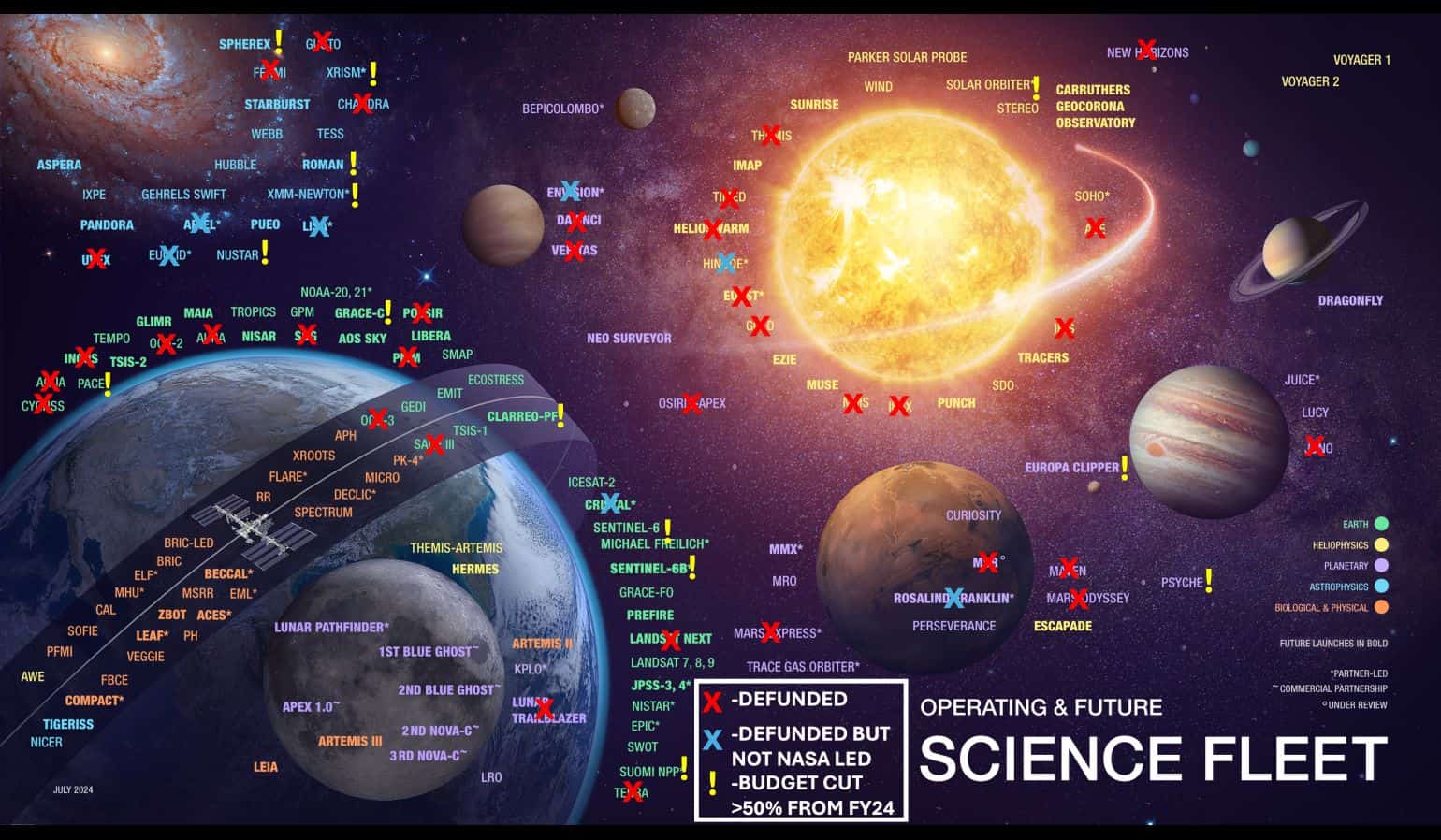
So, just over a week ago, Trump dropped this budget bombshell that’s like a knife to the heart of science research in the US. Seriously, folks, we’re talking a whopping 57% slash in funding for the National Science Foundation (NSF) for the year 2024. That’s huge, right? Now, get this—the physics and math folks at NSF are getting hit even harder with a jaw-dropping 67% cut. That’s over a billion dollars just evaporating. And despite Trump and Elon Musk being buds in the past, NASA isn’t safe either; it’s facing a 24% cut, with half of its science budget just wiped out.Global Impact
Now, don’t get me wrong, the US isn’t the only country funding science, nor is NASA the only one sending stuff to space. But, let’s be real, both are major players on the world stage, which is why I expected some chatter about this at last Tuesday’s Royal Society shindig about the UK’s space future. But nope, nada. The whole thing kicked off with David Parker, once a big shot at the UK Space Agency and now with the European Space Agency. He chatted up lessons from other space agencies, cracked a joke about the "four dimensions" of aircraft (including politics!), but didn’t touch the messy politics threatening NASA now under Trump.Conference Highlights
The morning continued with 19 folks taking the stage, and not a single whisper about the dire straits the science world is facing—an "almost extinction level" crisis, according to Nobel laureate Adam Riess.Astrophysics at Risk
Now, a standout surreal moment came when Sheila Rowan, a star astrophysicist, spoke about her work on gravitational waves. Despite her field facing massive funding cuts under Trump’s budget (like, seriously, they’re thinking of shutting down one of the LIGO detectors), she didn’t say boo about it. I hit her up later, and she mentioned prepping her speech before the budget news hit. But still, you’d think it’d come up, right?Future of Space Missions
Over the rest of the conference, we heard all kinds of future gazing about what we’ll be launching into space by 2075. But, here’s the kicker—if Trump’s budget goes through, a lot of that future might not happen at all. Over at the Astrobites website, this student Skylar Grayson detailed a depressing list of missions now on the chopping block. Missions that were supposed to push the boundaries of our knowledge are now marked for death.Missed Opportunities for Dialogue
Halfway through the event, I was hoping someone would tackle the elephant in the room—the savage cuts to NASA. But no, when satellite honcho Andrew Stanniland finally broached the subject, he veered off to talk about Musk’s Starlink satellites instead. Talk about missing the mark! I even tried to stir the pot with a question about the budget cuts in the online Q&A, but got crickets. The only real acknowledgment of the issue came near the end, when someone from the audience questioned the impact of such cuts on international collaborations. Gillian Wright from the UK Astronomy Tech Centre admitted it’s a tricky situation that’s not going to fix itself easily.Conclusion
Logging off, I felt a mix of depression and bewilderment. Why the silence from these bright minds on such a critical issue? It might be about not wanting to rock the boat or wait for an "official" statement. But this approach isn’t doing much to help the folks whose projects, dreams, and careers depend on stable funding. The same day, the US’s National Academies of Science had their big science event, and it seemed like they were even more tight-lipped than the folks at the Royal Society—talk about dodging the issue! Some hints of concern from NAS president Marcia McNutt and ex-congresswoman Heather Wilson, but mostly a whole lot of looking the other way. Bottom line? The science community deserves a lot better than this. We need to talk about these issues openly and find solutions, not just hope for a future that might never come if we keep ignoring the present threats.