



Groundbreaking Deep Learning Model for Urban Flood Prediction Revolutionizes Disaster Management
Introduction
Hey, have you heard about the latest in flood prediction technology? It’s getting pretty wild out there with all the rapid city growth and climate change shaking things up. So, these smart folks – Yang, J., Liu, K., and Wang, M. – have come up with something truly groundbreaking. They mixed deep learning with something called cellular automata to predict urban pluvial flooding like never before. Super fast, super accurate – that’s what their recent study in the International Journal of Disaster Risk Science is boasting about.Understanding Urban Pluvial Flooding
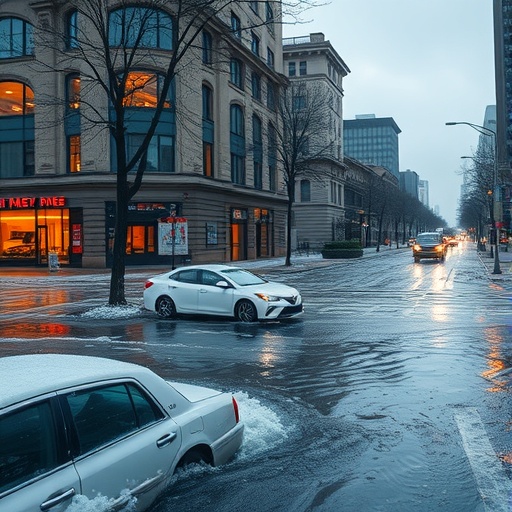
You know how annoying it is when a sudden downpour turns your city streets into mini lakes? That’s urban pluvial flooding for you. The rain just overwhelms the drainage systems, and bam, chaos ensues. Normally, the old-school way to predict this involves super complex models that eat up time and computer power – not ideal when you're trying to react in real time, right? But here comes the cool part: this new model by our trio of researchers uses what’s called convolutional neural networks (CNNs) – yep, the brainy tech that’s great at picking apart images – which they've teamed up with cellular automata to study water movement more realistically.Innovative Model Features
This isn't your average flood model. Nope, it doesn’t just run on fixed rules. It learns and adapts, using CNNs to tweak the rules based on actual water flow patterns in cities. Think of it like a video game that’s learning from every move you make, except this game is about predicting where flooding will hit next.Real-World Application
They didn’t just cook this up in a lab, either. They used real-deal data like elevation maps and historical flood records from a city that knows a thing or two about flooding. This way, they could really dial in the accuracy. And guess what? This hybrid approach not only cuts down on the grunt work needed for predictions but also gets results fast – we’re talking near real-time forecasts that can help divert traffic, start evacuations, and manage water levels before things get too hairy.Robust Performance
The best part? This model is tough. It doesn’t blink at data gaps or if data quality is a bit shaky - it still performs like a champ. Plus, it’s not a standalone hero; it plays nice with other city management systems, plugging into everything from GIS to smart city dashboards, giving everyone from urban planners to emergency teams the head's up they need to handle floods.Future Implications
Oh, and it’s not just about reacting faster. This tech could totally shift how cities plan and build in flood-prone areas. By simulating different ‘what-if’ scenarios, it helps city chiefs make smarter choices on everything from zoning laws to drainage improvements, all before the skies even darken. Looking ahead, there’s talk about taking the model even further, like factoring in underground water flows, or how floods stir up sediments and pollutants. There’s also a push to make the model clearer and easier to get for the folks who actually have to use this tech on the ground.A Game-Changer for Urban Flood Management
All in all, this new tool isn’t just a fancy piece of tech. It’s a game-changer for cities facing up to the new normals of wilder weather and more concrete jungles. Got to hand it to Yang, Liu, Wang and their gang – they’re helping us see how to stay one step ahead of Mother Nature’s curveballs. And let’s face it, in these crazy climate times, we need all the help we can get to keep our feet dry and our roads clear.