



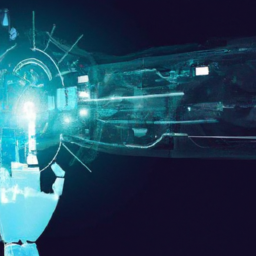
In a groundbreaking advancement, recent developments in artificial intelligence (AI) technology have shown significant potential in transforming healthcare diagnostics. Various healthcare institutions are now exploring how AI can improve accuracy and efficiency in diagnosing diseases, ultimately leading to better patient outcomes.
A study published in the Journal of Medical Internet Research highlights the efficacy of AI algorithms in analyzing medical imaging, such as X-rays and MRIs. These algorithms can quickly process and interpret images, identifying anomalies that might be missed by the human eye. For instance, AI systems developed by leading tech companies have demonstrated an ability to accurately detect early signs of conditions like pneumonia and certain cancers.
Moreover, AI-driven diagnostics are not limited to imaging. Innovations in natural language processing (NLP) now enable healthcare systems to assess patient records and medical histories, extracting relevant information to assist doctors in making informed decisions. This approach can significantly reduce the time spent on patient evaluations and enhance clinical workflows.
Dr. Anna Smith, a leading researcher in AI applications in medicine, commented on these advancements, stating, "The integration of AI into healthcare presents an unprecedented opportunity to enhance diagnostic accuracy. With the ongoing training of these algorithms on vast amounts of data, we can expect them to become even more reliable and efficient over time."
However, despite the promising capabilities of AI in diagnostics, some industry experts urge caution. Ethical considerations surrounding data privacy and the potential for over-reliance on technology pose challenges that need to be addressed. The medical community must work collaboratively to develop guidelines that ensure AI is used responsibly without compromising patient safety.
The ongoing research and implementation of AI in healthcare are paving the way for a more proactive and personalized approach to medicine. With continuous advancements, it is anticipated that AI-driven diagnostics will become standard practice, ultimately reshaping how healthcare providers interact with patients and manage diseases.
As these technologies evolve, collaboration between tech companies and healthcare providers will be essential. Innovations must align with clinical requirements and address real-world challenges faced by practitioners. In conclusion, the integration of AI in healthcare diagnostics offers a glimpse into a future where technology and medicine work hand in hand to enhance patient care.
For further details, you can read the full article on Example Resource.